Research foundations
In-sample vs out-of-sample, distributions, drawdown, uncertainty, selection, and why one backtest is not a conclusion.
Start here →Learning paths connect visual concepts, methods, task-based How-Tos, and precise reference material so a user can move from “what is this?” to “how do I use it?” without losing context.

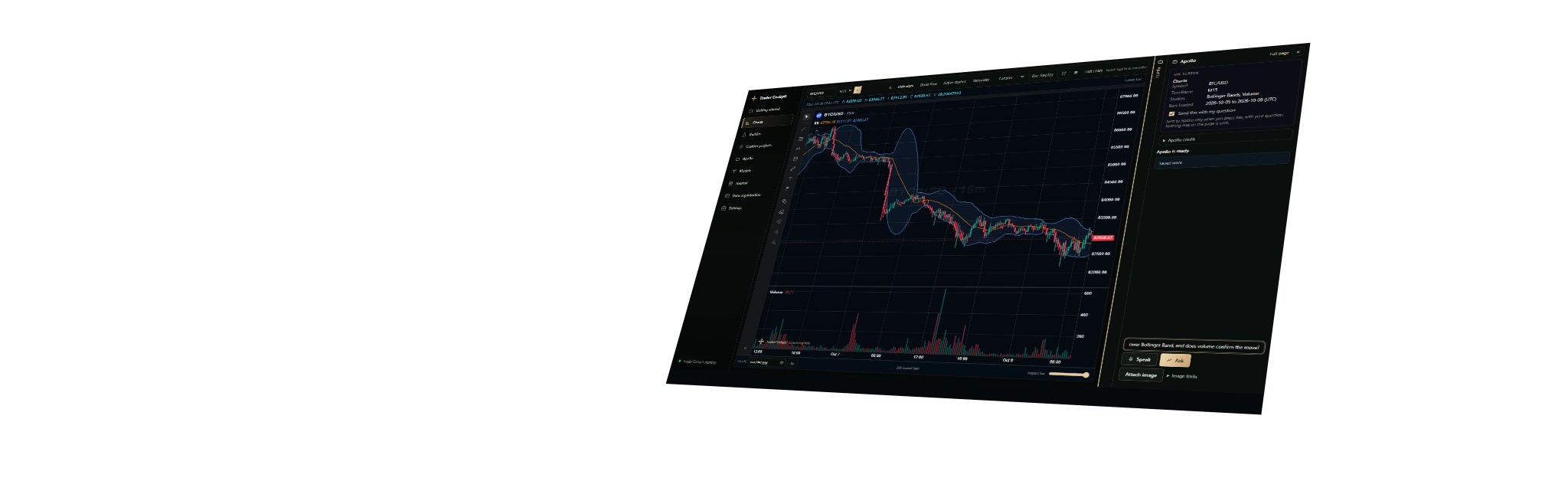
These paths organize the curriculum. Product-specific lessons appear only after their behavior has been verified.
In-sample vs out-of-sample, distributions, drawdown, uncertainty, selection, and why one backtest is not a conclusion.
Start here →Use interactive synthetic diagrams to understand high-dimensional candidate sets, Monte Carlo paths, and robustness geometry.
Open Research Lab →Task-focused lessons connect practical workflows to the concepts that explain why each step matters.
Open How-Tos →Use these concept pages to understand the research idea before applying it to a workflow or result.
Alternative paths under an explicit randomization or resampling rule.
Open concept →Separate evidence used for development from evidence reserved for evaluation.
Open concept →Move the train/evaluate boundary through ordered windows.
Open concept →Compare a broad neighborhood with an isolated optimized point.
Open concept →Depth, duration, and recovery from a prior running peak.
Open concept →Why the best-looking result changes meaning when many candidates were tried.
Open concept →See structure in relationships instead of counting exposures.
Open concept →Mean and dispersion can hide skew, tail mass, and multimodality.
Open concept →Define a regime with explicit state variables before treating the label as meaningful.
Open concept →Academy is not a thumbnail wall. Each lesson combines a short goal, written explanation, optional click-to-load video, related concepts, expected state, common mistakes, and the exact Docs link when a product reference exists.